Apple's 2001 iPod: The $399 Device That Bet on Music Before Smartphones
Two decades after its launch, the original iPod's reliance on hard drives and FireWire looks less like a revolution and more like a specific, fragile solution to a pre-smartphone problem.
By Anna Nowak ·
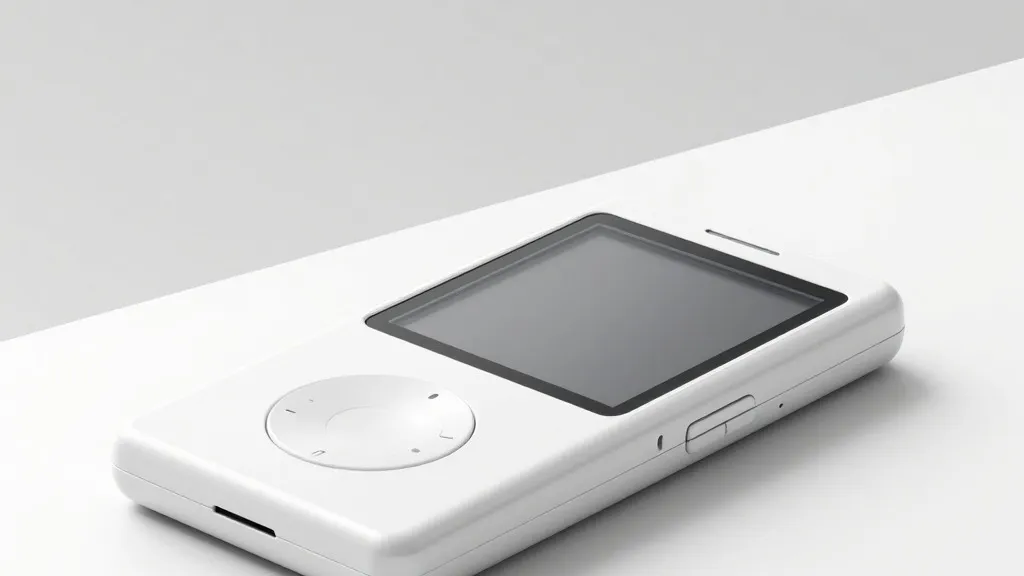
The device that claimed to hold a thousand songs in a package smaller than a deck of cards has just reached its silver jubilee.
On this day in 2001, Apple CEO Steve Jobs stepped onto a stage to unveil what he described as a breakthrough digital device that was not a Mac. While the company had already revived its fortunes with the Mac OS X era and the iMac, Jobs argued that the computer could become the hub of a broader digital lifestyle. He posited that music was the ideal entry point into this ecosystem, noting that while competitors like Sony and Creative had portable players, none had found the right formula for digital music.
The core promise of the original iPod was deceptively simple: it could store 1,000 songs on a 5GB hard drive. This capacity was a significant leap from the flash-based players available at the time, which suffered from limited storage. Jobs emphasized that for many users, this capacity represented their entire music library. The device supported standard formats of the era, including MP3, WAV, and AIFF, offering CD-quality sound in a format that was easy to manage.
The hardware behind this promise was a collaboration with Toshiba, which provided an ultra-compact 1.8-inch hard drive that was only 0.2 inches thick. This component allowed the final device to measure 2.4 by 4 by 0.78 inches and weigh just 6.5 ounces. Jobs highlighted that this made the player lighter than most cell phones of the day, a key selling point for a device designed to be carried everywhere. The design was intentionally minimal, with durable sides and a focus on single-hand usability through a scroll wheel with tactile feedback.
Perhaps the most contentious aspect of the launch was the reliance on FireWire for data transfer. Apple marketed the iPod as the first music player with this connection, claiming it could transfer an entire CD’s worth of data in five to ten seconds. In contrast, Jobs argued that USB transfers of the same data would take around five minutes. To fill the device with 1,000 songs, the FireWire connection promised a 10-minute wait, compared to an estimated five hours for a USB-based competitor. This speed was central to the device's appeal, alongside a lithium-polymer battery that offered 10 hours of playback and could recharge to 80% in an hour.
The software experience was equally pivotal, with the launch of iTunes 2 occurring on the same day. The new software introduced features like MP3 CD burning and, crucially, Auto-Sync. This feature ensured that the music libraries curated on a Mac were automatically mirrored to the portable player whenever it was connected for charging or transfer. The iPod also functioned as a FireWire hard disk drive, adding a layer of utility that went beyond simple music playback.
The context of the launch was critical; it occurred shortly after the dot-com bubble burst, a time when consumer electronics were a safe harbor for investment and innovation. Jobs’s vision of a digital hub was ambitious, but the iPod’s success was contingent on the ecosystem working seamlessly. The device was a specialized tool, not a general-purpose computer, and its longevity was tied to the popularity of curated digital music libraries.
Looking back, the iPod’s dominance lasted for over a decade, with the product line continuing until the 7th-generation iPod Touch in 2019. However, the arrival of the iPhone in 2007 began the slow process of making dedicated music players redundant. The official discontinuation of the line in 2022 marked the end of an era, leaving behind a legacy of a device that defined a generation of how people consumed music before the smartphone became the universal remote for our digital lives.
Source: Tom's Hardware